
Letting Patients Live
What I’ve learned about risk, joy, and advanced cancer

Last year, I wrote about a patient I cared for years ago with metastatic esophageal cancer. His name was Fred, and I’ve already shared part of his story here. But there is another piece of his experience that changed how I think about caring for people with advanced cancer.
Fred was in his early 70s and was definitely a character. He was warm, funny, kind, and easy to talk to. Even when things were hard and his health was starting to decline, he never stopped being himself.
Later in his treatment course, we reached a point where we knew the cancer was advancing. We were still caring for him and trying to help him feel as good as possible, but the overall direction was becoming more clear.
Around that time, he made a bucket list, and believe it or not, one of the things on that list was skydiving.
He asked me what I thought about the idea.
As his oncologist, I was well aware of his medical issues. He had heart disease, recent blood pressure problems, progressive cancer, and several other conditions that made the idea seem medically risky. He wasn’t exactly who you’d picture as the ideal candidate for jumping out of an airplane.
I did what doctors usually do—I weighed the risks. I thought about all the ways it could go wrong: he could have chest pain, faint, experience a blood pressure issue, or, worst-case scenario, not make it through. I called his daughter, a critical care physician, and she agreed that with everything going on medically, skydiving probably wasn’t the best idea.
So I told him I did not think it was the safest plan. He heard my advice.
And then he went skydiving anyway.
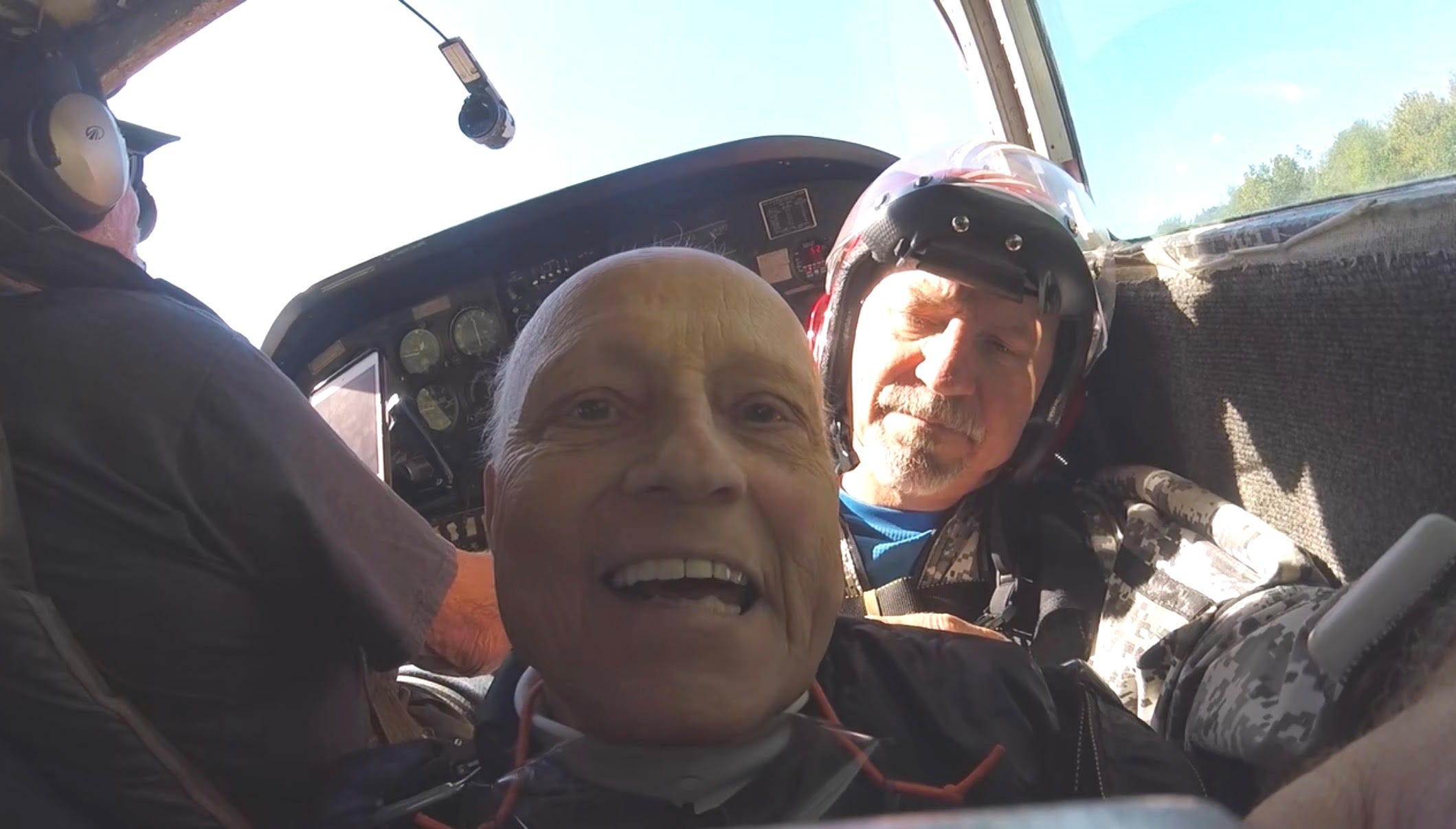
I found out at his next appointment that he had gone through with it. I also found out one of my own nurses had accompanied him, which somehow made the story even better. Not only did he do great, but he also came back and told me all about it.
I can still remember his excitement. He lit up as he told me how incredible it was and how glad he was to do something he had always wanted to do. He had this joy on his face that I can still picture.
And I remember thinking, maybe I got that one wrong?
Maybe not medically wrong, exactly. From a pure medical risk standpoint, I still understand why I was hesitant. This was a high-risk activity for a man with his medical problems.
But cancer care is not only about avoiding risk. It is also about helping people live.
That sounds obvious, but it is surprisingly easy to lose sight of in oncology.
When someone has advanced cancer, the focus in the medical world often shifts to what could go wrong. We carefully track blood counts, watch for infections and disease progression, ask about symptoms, and consider all the risks that might make someone worse: falls, blood clots, dehydration, side effects, oxygen levels, heart issues, and whether they’re strong enough for the next step.
It is a lot, and it is important. But if we are not careful, care can become mostly about preventing bad things instead of helping good things still happen.
I think I was more cautious earlier in my career. Probably too cautious at times. I remember being much stricter about things like whether a neutropenic (low white cell count) patient should go to church, attend a family gathering, or be around grandchildren. My instinct was often to protect, and of course that instinct comes from the right place. Infection risk is real. Some patients are very vulnerable, and there are times when avoiding a crowd or delaying a trip is absolutely the right call.
Over time, my philosophy has changed.
I still talk openly about the risks and share my concerns when they come up. If someone is neutropenic, I make sure they understand that a fever is a medical emergency. If they are planning to travel, we talk through what could get complicated and how quickly illness can change. But these days, I work harder to make sure my caution does not become paternalism.
There’s a big difference between saying, “Here’s what concerns me, here’s what might happen, and here’s how we can make this safer,” and saying, “You shouldn’t do this,” as if the medical risk is the only factor in the decision.
Over the years, many patients with advanced cancer have asked me some form of the same question. Can I take that cruise? Can I travel to Europe? Can I fly to see my grandchild? Can I spend time at the beach? Can I attend the wedding? Can I finally check this off my bucket list?
Earlier in my career, I would think through all the possible complications first. What if they get short of breath? What if they need a transfusion? What if they get admitted somewhere far from home? What if the pain gets worse? What if they decline while they are away?
Those are genuine questions I still find myself asking. I’ve seen patients end up in hospitals far from home, sometimes even in other countries, and it can be a harrowing experience for them and their families.
So I never want to pretend these decisions are simple. To me, it is about being honest with our patients while also being humble about how much we really know. As physicians, we can often estimate the medical concerns around something like travel, a cruise, or a bucket-list experience, but we cannot perfectly predict what will happen. We also cannot fully measure what that experience might mean to the person sitting across from us.
What if this is the last chance they have to go? What if the memory is worth more than the risk? What if staying home is not actually safer in the way that counts? What if the goal is not just to stay alive, but to feel alive?
There is a version of oncology that can become too conservative. We can become so focused on keeping patients safe that we unintentionally make their world smaller and smaller. No travel, no big plans, no adventure, no “let’s just try.”
We’re great at keeping tabs on negative outcomes—hospitalizations, falls, blood clots, ICU stays, treatment delays, abnormal lab results. But we’re not nearly as good at recognizing the real worth of a once-in-a-lifetime experience.
Fred’s experience taught me an important lesson. He listened to my cautious medical advice, respected it, and then chose his own path. In doing so, he reminded me that my role isn’t to control every decision a patient makes, but to inform, guide, support, and care.
Sometimes, my job is to get out of the way a little.
I think about that more often now when patients ask about travel or bucket list plans. I still give my medical opinion, and I still let them know when I am worried. But I am much more likely now to say, “Yes, go. Let’s just plan for it.”
Go see your family. Go to the beach. Take the trip. Go to the wedding. Sit by the ocean. Eat the meal. Watch the sunset. Do the thing that makes you feel like yourself. Be alive.
Now I realize more than ever that letting patients live is not separate from cancer care. It is cancer care.
Did you enjoy this article? Please consider supporting Curative by upgrading to a paid subscription. It helps this work reach more patients, caregivers, and clinicians who are trying to make sense of cancer care with honesty and compassion.
I also always appreciate your comments and restacks.
In case you missed:
Stranded on I-74

It was 4:30 AM on an unpleasantly cold and rainy November morning. I was on my way to the Indianapolis airport to catch a morning flight to Montego Bay, Jamaica for a medical mission trip. This was during medical school, and our group had planned the trip months earlier.
The Emotional Math of Oncology

I saw one of my longtime patients in clinic yesterday. She’s 74 now. We first met in 2017 when she was diagnosed with stage IV lung cancer. Her scans showed a large mass pressing on her airway and fluid collecting around her lungs. She was short of breath just walking to the exam room. Her prognosis was grim.
Throughout my treatment stage(s) my oncologist would ask “what’s something fun you have planned coming up ?” And it really helped me realize how important that is in life-especially when you’re dealing with cancer all the time. I would find myself making plans because he would be asking.
What a blessing that was.
As a retired oncology certified nurse, Our office rarely limited patients desires to accomplish their bucket list. We supplied extra medicine, sent scripts to the pharmacist near them. I had snow birds, patients with homes in other countries. We tried hard to make their travel possible. One man just wanted to dance at his daughter's wedding. A year later he had done that and met his first grandchild. We never took away hope until the very end . Then we tried to keep them as comfortable as possible. Thank you for not losing sight of patients humanity.